
Home Air Quality Test Guide:
How to Test Every Hazard in Your Home
Your home has 6-10 invisible air hazards. Most people never test for any of them. Here is the complete guide to testing for radon, mold, CO, VOCs, lead, asbestos, and more — with specific product recommendations for each.

Start here: one device, 6 hazards
The Airthings 2960 View Plus tracks radon, CO2, VOCs, PM2.5, humidity, and temperature 24/7.
This single monitor covers most of what you need. It connects to Wi-Fi, sends alerts to your phone, and gives you daily/weekly/monthly trends. Place it in your most-used room.
Get the Air Quality Monitor — See What Is in Your Air →Testing Priority — What to Test First
| Hazard | Priority | Test Method | Cost | Turnaround |
|---|---|---|---|---|
| Radon | CRITICAL | Charcoal kit or digital monitor | $15-250 | 2-7 days (kit) / instant (monitor) |
| Carbon Monoxide | CRITICAL | CO detector (continuous) | $20-50 | Instant alarm |
| Mold | HIGH | DIY test kit or air sample | $20-40 | 48 hours |
| VOCs | HIGH | Continuous monitor | $100-250 | Instant readings |
| PM2.5 / Dust | MODERATE | Air quality monitor | $100-250 | Instant readings |
| Humidity | MODERATE | Hygrometer (in most monitors) | $10-20 | Instant |
| Lead Paint | IF PRE-1978 | Instant test kit | $15-30 | Instant |
| Asbestos | IF PRE-1980 | Lab test kit | $30-50 | 1-2 weeks (lab) |
Recommended Tests by Hazard

Radon — #1 Priority
Continuous digital radon detector. No lab fees. See results in 24 hours. The EPA recommends testing the lowest lived-in level of your home.

Carbon Monoxide — #2 Priority
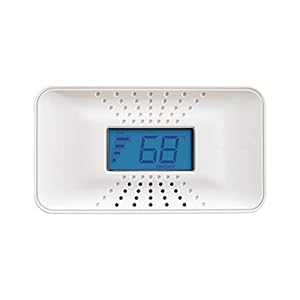
Plug-in CO detector with battery backup and digital display. Install on every level and outside bedrooms. Non-negotiable for any home with gas appliances.

Mold — High Priority
DIY mold test kit for air and surface testing. Results in 48 hours. Test if you see any discoloration, smell mustiness, or have unexplained respiratory symptoms.

VOCs and Formaldehyde — High Priority
Portable air quality monitor tracking PM2.5, formaldehyde, and TVOC. Use after new furniture, painting, renovation, or if you smell chemical odors.
Lead Paint — If Home Built Before 1978
EPA-recognized instant lead test kit. Test paint, dust, and soil. Essential if you have young children and live in an older home.

Asbestos — If Home Built Before 1980
EPA-approved asbestos test kit with lab analysis. Test ceiling tiles, floor tiles, insulation, and pipe wrapping before any renovation work.
When to Hire a Professional Instead
DIY tests are great for screening. But call a certified professional if:
- ▶ Your radon test comes back above 4.0 pCi/L — you need a mitigation system
- ▶ Mold covers more than 10 square feet — EPA recommends professional remediation
- ▶ Your asbestos test is positive — do NOT disturb it yourself; hire an abatement company
- ▶ Lead paint is chipping or peeling in a home with children — professional encapsulation or removal
- ▶ Anyone in your home has persistent unexplained symptoms — get a comprehensive air quality inspection ($200-500)
Total Cost to Test Your Home
Basic Screening
$50-80- ✓ Radon test kit ($20)
- ✓ CO detector ($20)
- ✓ Mold test kit ($15)
- ✓ Hygrometer ($10)
Comprehensive DIY
$300-500- ✓ Air quality monitor ($200)
- ✓ Radon test kit ($20)
- ✓ CO detector ($25)
- ✓ Mold test kit ($15)
- ✓ VOC monitor ($100)
- ✓ Lead test kit ($15)
- ✓ Asbestos test kit ($30)
Professional Inspection
$300-800- ✓ Certified inspector
- ✓ Lab-certified results
- ✓ All hazards covered
- ✓ Written report
- ✓ Remediation recommendations
Frequently Asked Questions
Can one device test for everything?
No single device tests for all hazards. The Airthings 2960 View Plus covers radon, CO2, VOCs, PM2.5, humidity, and temperature — but it does NOT detect CO, mold, lead, or asbestos. You need a CO detector, mold kit, lead kit, and asbestos kit for complete coverage.
Are home air quality tests accurate?
EPA-approved radon and lead test kits are highly accurate when used correctly. Mold test kits give a general indication but professional air sampling is more precise. Digital air quality monitors are good for tracking trends but less accurate than lab analysis for absolute values.
What if my tests come back positive?
Click through to our individual hazard pages for detailed action steps. For radon above 4.0 pCi/L, install a mitigation system. For mold, follow our mold vs mildew guide. For CO, evacuate and call 911 immediately. Each hazard has specific protocols in our hazard guides.
How often should I retest?
Radon: every 2 years or after renovations. CO: continuous monitoring with detector replacement every 5-10 years. Mold: test whenever you see or smell growth. VOCs: test after new furniture, painting, or renovation. Lead and asbestos: test once if applicable, then retest after any disturbance.
Air Quality Quiz
2-minute risk assessment for your home
Room Scanner
Hazards by room — know what to test where
Air Purifier Guide
What to buy after you know your numbers
You Cannot Fix What You Do Not Measure
Most air hazards are invisible, odorless, and symptomless until damage is done. A $200 air quality monitor and a $20 radon test kit tell you what is actually in your air.
Get the Air Quality Monitor — Stop Guessing →